Buyers and sellers almost always look an agent up online before they call. A good real estate website doesn't just look professional, it brings in new leads every week. Here's how agents across the GTA can make their website work harder.
1. Offer a free home evaluation
A "What's my home worth?" form is one of the best seller lead magnets in real estate. Ask for the address and contact details, then follow up personally with a comparative market analysis. Put this offer on your homepage and in your navigation.
2. Build community pages that rank
People search for neighbourhoods: "homes for sale in Cornell Markham", "living in Scarborough Village". Create a page for each area you serve with local schools, parks, transit, typical home prices and your recent sales there. These pages rank on Google and show you know the area.
3. Make property search easy
Buyers want to browse homes. Feature your own listings with great photos, and where your board allows, add MLS® search with filters for price, area and home type. Let visitors save searches and get email alerts so they keep coming back to your site, not a portal.
4. Show proof: reviews and sold homes
Add client testimonials with names and areas, your sold listings and any awards. Link to your Google reviews. Social proof turns a curious visitor into someone ready to call.
5. Make contact instant
- Tap-to-call phone number at the top of every page
- WhatsApp button for quick questions
- Short forms: name, phone, email and one question
- A clear "Book a consultation" button
Then respond fast. The agent who replies first often wins the client.
6. Add helpful tools and guides
A mortgage calculator, a first-time buyer guide or a step-by-step selling checklist keeps people on your site longer and positions you as the expert. You can offer a downloadable guide in exchange for an email address.
7. Get the local SEO basics right
Complete your Google Business Profile, keep your name and phone number consistent everywhere, use area names in your page titles and collect reviews regularly. Our local SEO checklist covers every step.
8. Track what brings leads
Use Google Analytics to see which pages and sources bring enquiries. If your community pages are bringing seller leads, write more of them. If a listing page gets lots of views, promote it on social media.
Examples from the GTA
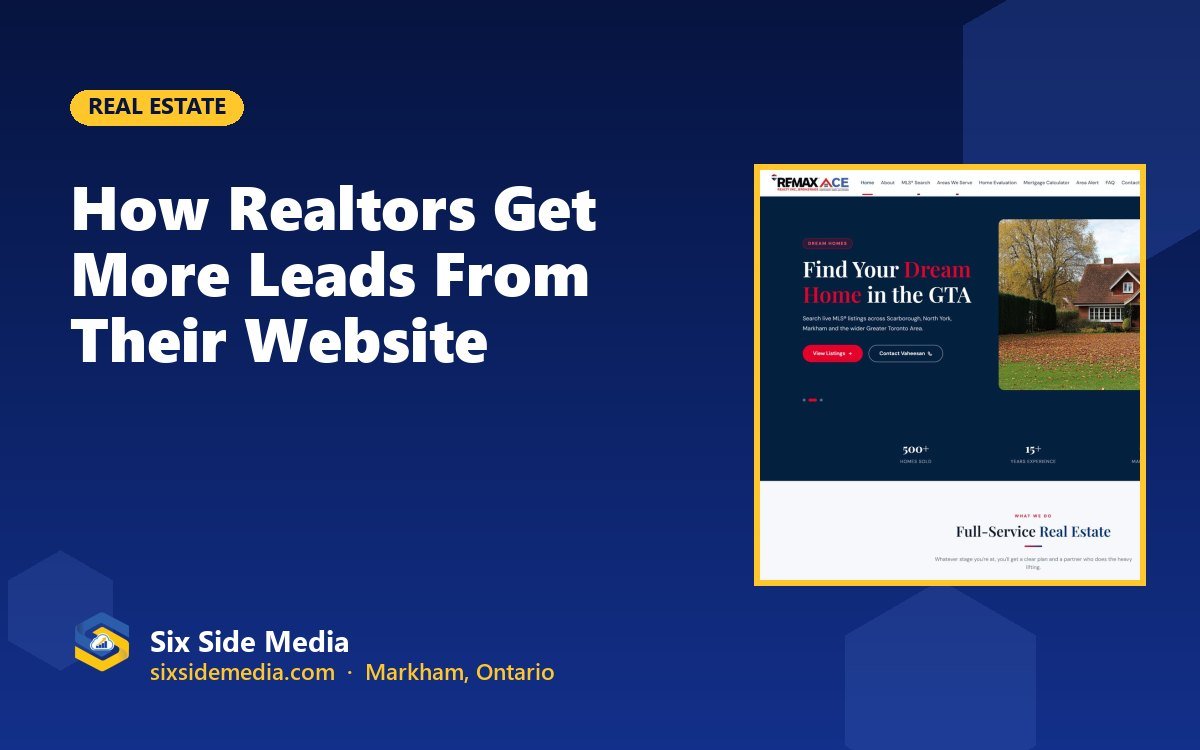
- Vaheesan Jeyaveerasingam, RE/MAX Ace Realty: MLS® search, area guides, mortgage calculator and home evaluation.
- Selvan Puvaneswaranathan, RE/MAX Crossroads Realty: featured neighbourhoods, client reviews and area alerts.
- Dominic Dumenil, HomeLife/Future Realty: home-value tool and featured Durham neighbourhoods.
Frequently asked questions
Is a brokerage profile page enough for a realtor?
A brokerage profile helps, but it looks the same as every other agent's and you don't control it. Your own website lets you show your listings, reviews, local expertise and lead forms, and helps you rank for searches in your area.
Can my website show MLS® listings?
Often, yes. MLS® or IDX listing feeds depend on your real estate board and brokerage rules. We have built realtor websites with MLS® search for agents in Toronto, Scarborough and Durham and can confirm the options for your board.
How much does a realtor website cost?
Our plans start at $14.99 CAD/month. For agents we usually recommend Advanced ($24.99/month) for its SEO and community pages. MLS®/IDX search is quoted separately because it depends on your board.
Six Side Media is a Markham-based team with 12+ years of experience helping businesses across Toronto and Canada grow online. Get a free consultation and a clear plan for your project.